
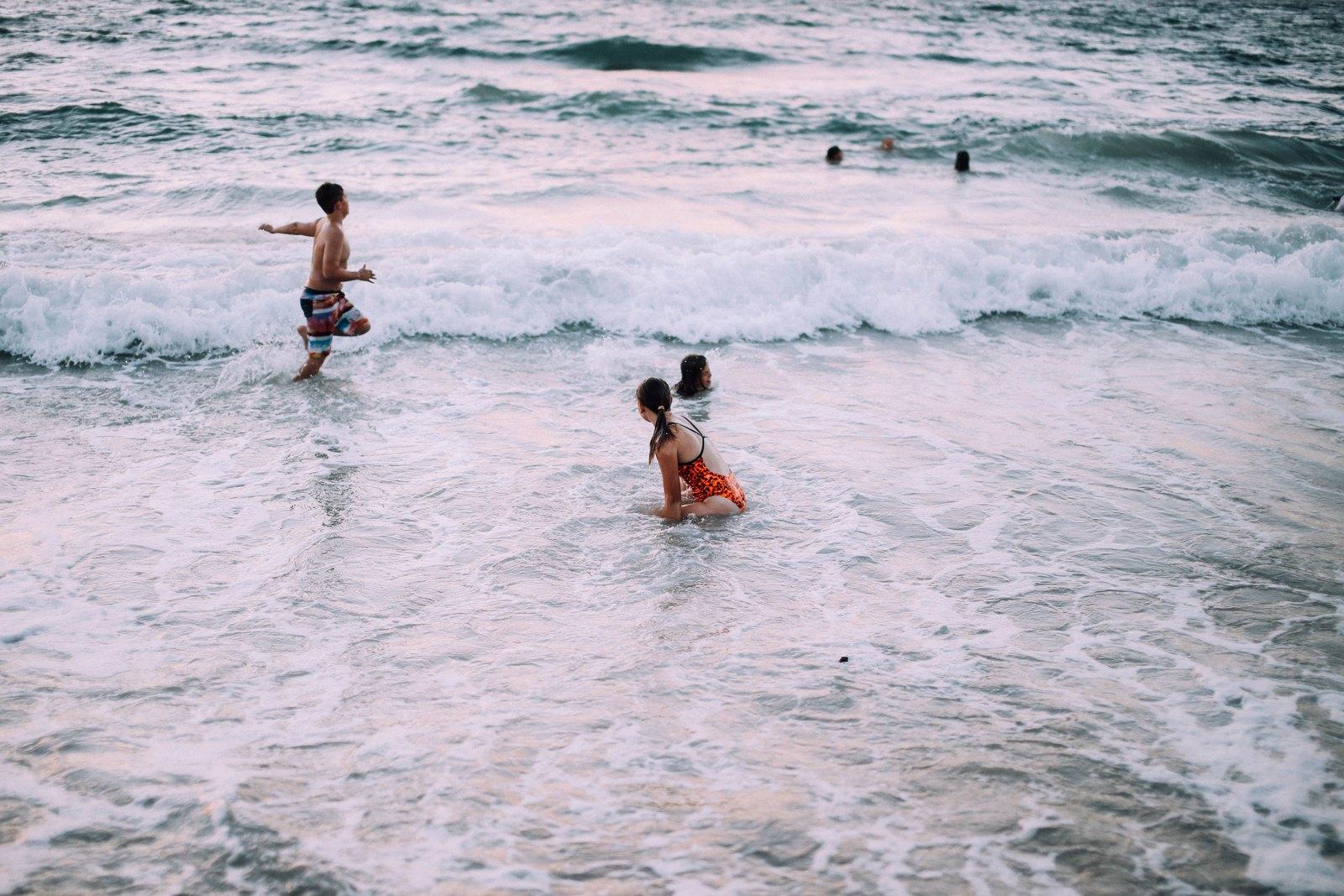
A child who swims confidently in the pool isn’t automatically safe in the ocean, and that gap catches out more families than you would expect. It’s worth closing before your next trip to the beach: the sea is not a bigger version of your local pool. It moves, changes and asks something different of every swimmer in it, and none of that needs to be frightening.
A little preparation and a few clear safety rules, talked through calmly before you reach the sand, can turn a beach day into pure fun rather than a source of worry.
Understanding Ocean Hazards: What Looks Safe May Not Be
A calm-looking sea can change within minutes. Waves build and currents shift, and conditions that felt gentle at ten in the morning can feel different by lunchtime. That unpredictability sits at the heart of the open water vs pool swimming differences, and it’s worth explaining plainly to your child rather than assuming they will work it out.
Shallow water near the shore deserves the same respect. A gentle-looking shore break can knock a small child off their feet, and the seabed is rarely as even as a pool floor. The simplest beach safety rule to teach is also the most useful one: never turn your back on the waves. Facing the water, even in the shallows, means your child can always see what’s coming.
Reading the Beach: Flags, Signs and Lifeguard Zones
Most patrolled beaches use a simple flag system. Teaching your child to recognise these colours and what they signify in terms of safety rules gives them one more way to judge a situation for themselves.
- Red and yellow flags: These mark the safest stretch of water, watched over by lifeguards.
- Red flags: Stay out, no exceptions.
Swimming between the flags should be non-negotiable, every visit, regardless of how confident your child feels that day. It’s also worth making a small habit of locating the lifeguard station as soon as you arrive. Knowing exactly where to run for help is a safety tip worth repeating for every visit.
What to Do if You Get Caught in a Rip Current
A rip current, sometimes called a rip tide, is a narrow channel of water flowing out to sea faster than the water around it. It’s one of the most misunderstood hazards at any beach, largely because it can be almost invisible from the shore.
The instinct in a rip current is to swim straight back towards the beach, but what many swimmers don’t realise is that this move wastes energy fighting a current that’s too strong to overcome. The rule worth repeating until it becomes second nature is this: swim parallel to the shore, not against the current, until you are clear of it, then angle back in.
If your child cannot get clear straight away, staying calm and floating matters more than swimming hard. A rip current will not pull anyone under. It carries them along the surface, and a child who can float, breathe steadily and wave for help will conserve the energy they need until help arrives.
Ocean Creatures and Hidden Hazards Underfoot
Jellyfish, sea urchins and sharp or slippery rocks are a normal part of any beach, and knowing they exist takes away most of the surprise. A simple habit prevents many of these mishaps: shuffling your feet while entering the water rather than stepping in confidently. It gives any hidden creature or sharp edge on the seabed a chance to move away first.
If your child is stung or injured, staying calm is the first step, followed by getting them out of the water and finding a lifeguard straight away. Most stings look and feel worse than they are, and a prompt, calm response is usually all that’s needed.
The Non-Negotiables: Beach Safety Rules Every Child Must Know Before Entering the Ocean
Some rules are worth repeating until they become automatic, long before a child can explain why they matter.
- Never swim alone: An adult should always be present and watching, no exceptions, however confident your child feels.
- Ask first: Permission from a parent or guardian comes before every entry into the water, every single time.
- Stay in depth: Water at or below chest height is the limit until your child's skills and confidence are strong enough for more.
- Speak up: If something feels wrong in the water, a child should shout for help immediately, without waiting to be sure.
These four swimming safety tips take minutes to talk through, and give a child something solid to hold onto when the water turns unpredictable.
How Formal Swim Lessons Prepare Children for the Ocean
Everything a child practises in the pool, from floating and breath control to building stamina, becomes directly useful in open water. A child who has spent time building these foundations through structured swimming lessons for beginners carries that groundwork straight into open water. When the sea feels less predictable than the pool they know so well, they tend to respond far more calmly.
That calm response is the goal. A confident, water-safe child does not panic when a wave catches them off guard, because their body already knows what to do. At The Swim Starter, all our qualified swimming coaches for kids build these skills gradually in small groups, allowing pool comfort to transform into genuine capability in open water. Families training at our Pasir Ris swimming class or any of our other locations follow the same steady pathway.
Ready to Make a Splash? Start Your Child's Swimming Journey Today

Ocean safety doesn’t begin on the sand. It begins weeks earlier, in a pool, with a coach patient enough to build real skills at your child's pace. Swimming lessons for beginners cannot prevent every risk the sea presents, and they are never a substitute for watching your child closely. What they do offer is a genuine layer of protection and the water confidence that helps a child think clearly when it matters most.
If your family has more beach days planned this year, there’s no better time to start. Book a free trial lesson and see how quickly the pool becomes the place your child's ocean confidence begins.


